
There’s no better testimony to the excellence of a Candler education than the impact our 8,400 alumni make every day.
From pastors to policymakers, chaplains to scholars, nonprofit leaders to ministry entrepreneurs—and so much more—they live their calls, making a difference in the communities and churches they serve. In ways both seen and unseen, they are changemakers, eager to apply their gifts and the fruits of their learning to join God’s work of transforming the world. Read on to meet just a few of the many Candler grads who are leading change according to their unique calls. We’ll be adding folks to the mix throughout the year, so check back often to see who’s new!
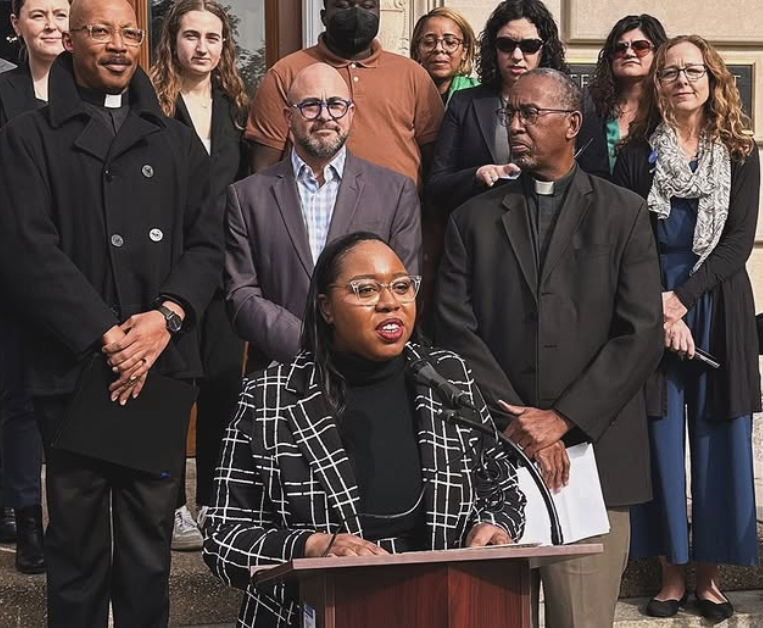
Camille Henderson-Edwards, MDiv ’18
PASTORING IN THE PUBLIC SQUARE
Senior Executive Director for Advocacy, General Board of Church and Society, Washington, DC
Public theology, social advocacy
Meet Camille Henderson-Edwards, a trailblazer making strides toward a more faithful, just and peaceful world through her work at GBCS, the public policy arm of The United Methodist Church. Camille provides strategic leadership and shapes policies that drive systemic change in the areas of civil and human rights, peace with justice, economic, health and ...

Camille Henderson-Edwards, MDiv ’18
PASTORING IN THE PUBLIC SQUARE
Senior Executive Director for Advocacy, General Board of Church and Society, Washington, DC
Public theology, social advocacy
Meet Camille Henderson-Edwards, a trailblazer making strides toward a more faithful, just and peaceful world through her work at GBCS, the public policy arm of The United Methodist Church. Camille provides strategic leadership and shapes policies that drive systemic change in the areas of civil and human rights, peace with justice, economic, health and gender justice, and environmental justice. She advocates in the U.S. and across the world, representing the UMC’s denominational positions in the U.S. Congress and before administrative offices of the government.
Before to her work at GBCS, Camille, an ordained elder in the North Georgia Annual Conference of the UMC, served as an associate pastor at Cascade United Methodist Church in Atlanta and gained valuable experience with the Congressional Black Caucus Foundation, the Children’s Defense Fund, and The Carter Center’s Human Rights Program.
Camille says that the witness of Black women inspires her ministry, which she describes as journeying with faith communities to create comprehensive responses to unjust conditions, especially issues of gender-based violence. “I am committed to ensuring that the church curates sacred space for women and girls to flourish,” she says.
As a womanist theologian and practitioner, Camille aspires to bridge social justice and the life of the church, “pastoring in the public square” to advocate for a more faithful, just, and peaceful world.
Meet More Candler Changemakers



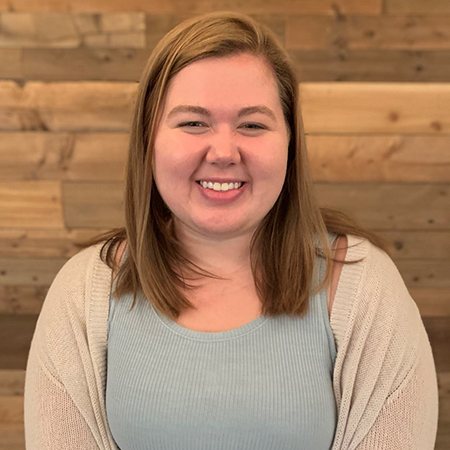
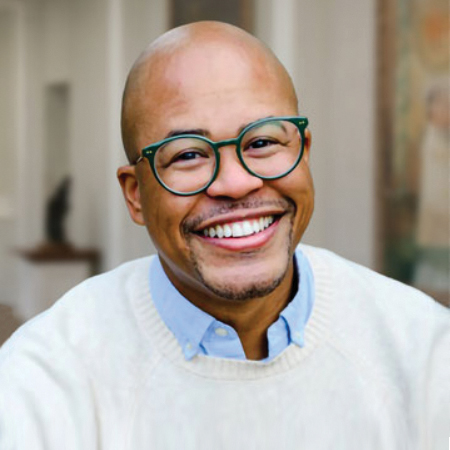
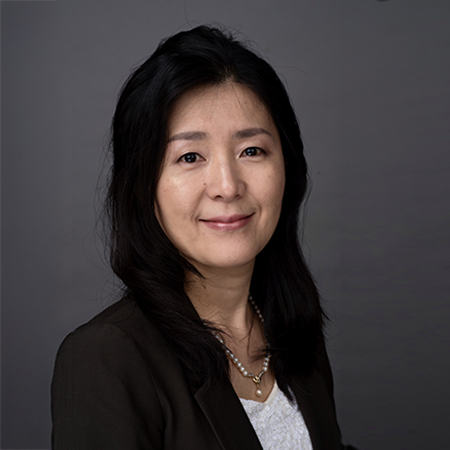
Matt Miofsky
MDiv ’02
Founder and Lead Pastor, The Gathering UMC, St. Louis, Missouri
Parish Ministry, Author
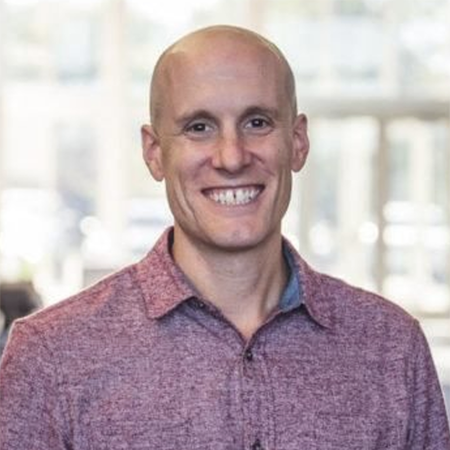
Changemaker Matt Miofsky is the founding pastor of The Gathering United Methodist Church in St. Louis, Missouri, a thriving multi-site congregation. Established in 2006, The Gathering was born out of a small house group with a vision for a new kind of church, one that actively engages new generations and makes a significant impact on its surrounding community.
Under Matt’s leadership, The Gathering has expanded to three physical locations around St. Louis—with two more opening later this year—as well as online. These sites offer diverse worship experiences and support a broad range of ministries according to the needs of the neighborhood. The church also leans into our human need for connection—to God and to each other—fostering a sense of belonging even for those who may have felt that they don’t belong in church.
A big part of nurturing belonging at The Gathering comes from small groups. CoreGroups meet weekly to grow spiritually, reflect, and develop long-lasting friendships. There are groups you might expect related to age, gender, and life stage, and some you might not, like pop culture and the Bible, LGBTQ+ and allies, parents of kids with disabilities, an artists’ collective, and people of color. There are also Wellness Groups, six-week groups that meet around pastoral care needs so people don’t have to struggle alone. Recent topics include grief, parents of gender diverse kids, addiction and recovery, and navigating difficult family dynamics.
The Gathering’s impact reaches even farther than St. Louis. Since 2023, the church has hosted BEYOND, an annual conference helping progressive churches recover the practices of evangelism and growth while remaining unapologetically inclusive.
In addition to leading in parish ministry, Matt has also written several books, including Let Go: Leaning into the Future without Fear and his latest, The Methodist Book of Daily Prayer. His work often explores how churches can evolve to meet the needs of their communities, blending traditional Christian practices with unique approaches to ministry as they do at The Gathering—proof that you don’t have to erase the slate to bring about change.

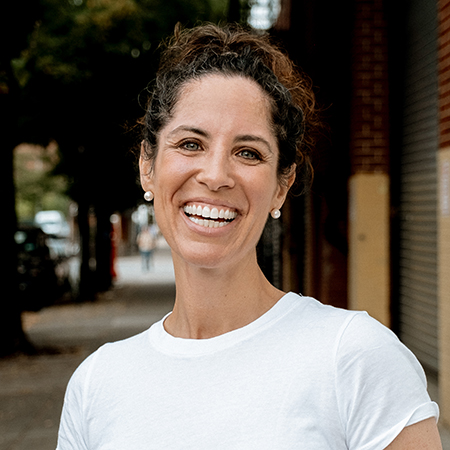
Alissa Cohan
MRL ’24
Founder of tapfer
Spiritual entrepreneurship, mental health advocacy
Changemaker Alissa Cohan is transforming telehealth with tapfer, an innovative platform that seamlessly connects individuals, organizations, and healthcare networks with licensed spiritual care providers in real time. Rooted in Alissa’s vision for accessible spiritual care, tapfer’s success has been propelled by her time at Candler and the dynamic Emory ecosystem.
During her time at Candler, Alissa honed her entrepreneurial vision for tapfer with support from The Hatchery, Emory’s Center for Innovation, the Center for AI, and Goizueta Business School’s SLA Accelerator. These programs provided critical mentorship and resources, fueling tapfer’s success. Her Emory connections also led to a pivotal advisorship with Dr. Jennifer Mascaro of Emory School of Medicine, whose NIH award-winning research on compassion-based medicine and spiritual care validated tapfer’s impact on mental resilience and patient outcomes.

Tapfer is rapidly expanding, from corporate settings to a groundbreaking law enforcement pilot addressing mental illness, PTSD, and nonviolent solutions. Named a “Top 25 Startup to Watch” by the Atlanta Business Chronicle, tapfer is redefining spiritual care in high-stakes environments. Its acceptance into Missional Labs helped refine the platform, enabling its expansion into industries like corporate wellness and law enforcement, driving innovation in mental health and resilience.
Alissa says the goal is for tapfer to be the first telehealth platform for certified chaplains, backed by the nation’s first spiritual health database. She wants to ease emotional distress and de-stigmatize behavioral health by connecting users with the spiritual health care they need, when they need it.
“This is meaningful to me because, at the heart of pioneering tapfer, we are democratizing access to care by building the first telehealth platform for pastoral and faith-based care.”
Brandon J. Stewart
MDiv '10
Chaplain, United States Air Force
Travis Air Force Base, California
Chaplaincy, law
For Brandon Stewart, being a chaplain is not just a job. Serving others, nurturing spirituality—”it’s a lifestyle, a calling, an everyday experience. It’s who I am and what I do,” he explains.
Brandon’s journey as a chaplain in the United States Air Force has taken him across the world to Germany, Korea, and Turkey and across the country from Florida to California, where he currently serves. Tending the spiritual needs of the military community in these varied contexts has given him ample opportunity to hone his gift for building bridges between people and across cultures—something he developed a passion for at Candler.
Candler provided him with a strong network of African Americans who shared similar cultural experiences, and at the same time challenged him to understand and empathize with those from different backgrounds. There was space to explore diverse perspectives and build skills in bridging gaps between differing viewpoints.
After earning his MDiv, Brandon served as an English-speaking youth pastor in South Korea, which sharpened his cultural insights and deepened his desire to serve internationally. When he returned to the U.S., he balanced law school, Air Force Chaplain Reserves, and pastoral duties (he’s licensed and ordained in the Baptist tradition), ultimately earning his JD from the University of Dayton.
With his unique blend of pastoral care, legal expertise, and cultural competency, Brandon does a lot of counseling, preaching, teaching, and advising to support individuals navigating complex situations.
“As a chaplain, my job is to keep people excited and energetic about life, about living,” he says.
Currently, Brandon is executive officer of the Veterans Affairs and Military Law Section of the National Bar Association, co-social chair of the Charles Houston Bar Association, and a life member of Alpha Phi Alpha fraternity. He’s recently been selected to serve in the United States Coast Guard Judge Advocate General’s Corp. His past service includes social justice chair of the Young Lawyers Division Board and board member of Habitat for Humanity Bay County. He’s been on not one, but two 40 Under 40 lists (for Emory and the National Bar Association) and received Candler’s Outstanding Young Alumni award.

Juan Carlos Huertas
MDiv ’05
Minister of Proclamation and Practice of Justice, First-Plymouth Congregational Church (UCC), Lincoln, Nebraska
Parish ministry
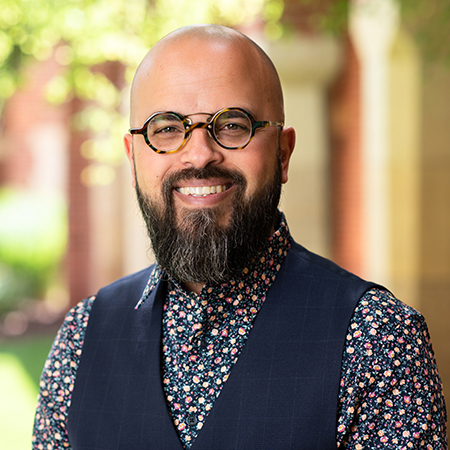
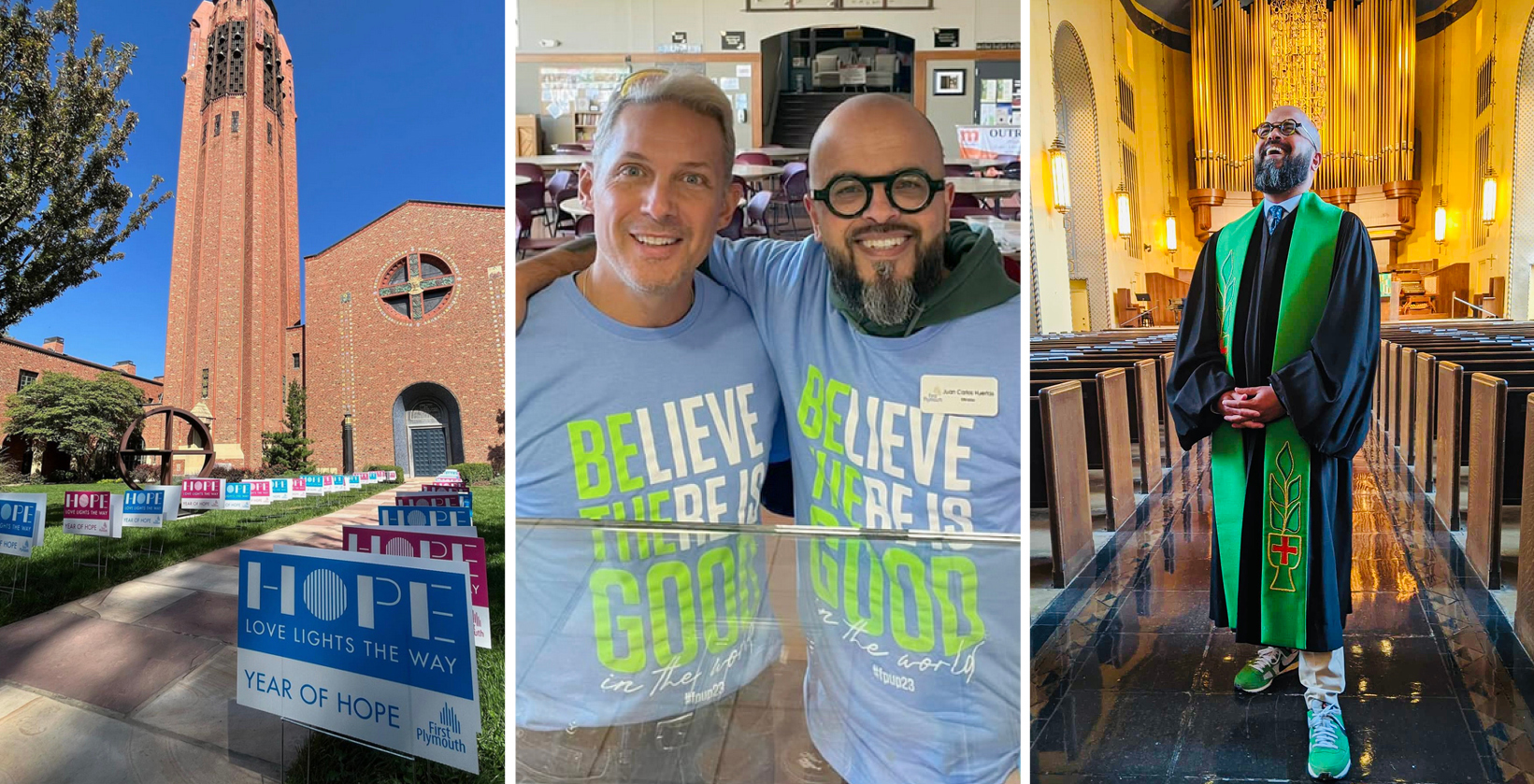
Juan Carlos Huertas—a self-described “follower of Jesus, husband, dad, spiritual director, and pastor”—is a great person to talk to about change, especially the exhilarating possibilities and challenges that stem from staying open to God’s movement in your life. In the past few years, Juan Carlos has undergone a big transition in ministry, moving from a United Methodist pastorate in western Louisiana to the staff of a large United Church of Christ congregation in urban Nebraska. He describes the journey as a “beautiful whirlwind” that has enriched both his family life and pastoral work.
At First-Plymouth, Juan Carlos is focused on re-engaging the congregation with their community after the pandemic, emphasizing preaching, teaching, kinship, and justice work. A glance at some of the work he’s doing now gives a clue to how this plays out in everyday life: he’s leading a series called “Healing Resistance: Conversations on Non-Violence, Advocacy, and Solidarity in Urgent Times” and co-leading with the senior minister a sermon and discussion series called “Heaven and Hell Revised,” an exploration of hope in the C.S. Lewis novel The Great Divorce.
Throughout his career, Juan Carlos has recognized the challenges of staying grounded amidst constant change, striving to maintain hope and integrity in his ministry and personal life. One thing that grounds him is his call: “To work as Jesus would have us work to make a difference in our community, working together for peace and justice.”
Sarah Gerwig
MTS/JD ’02
Professor, Mercer University School of Law
Social justice, law, higher education
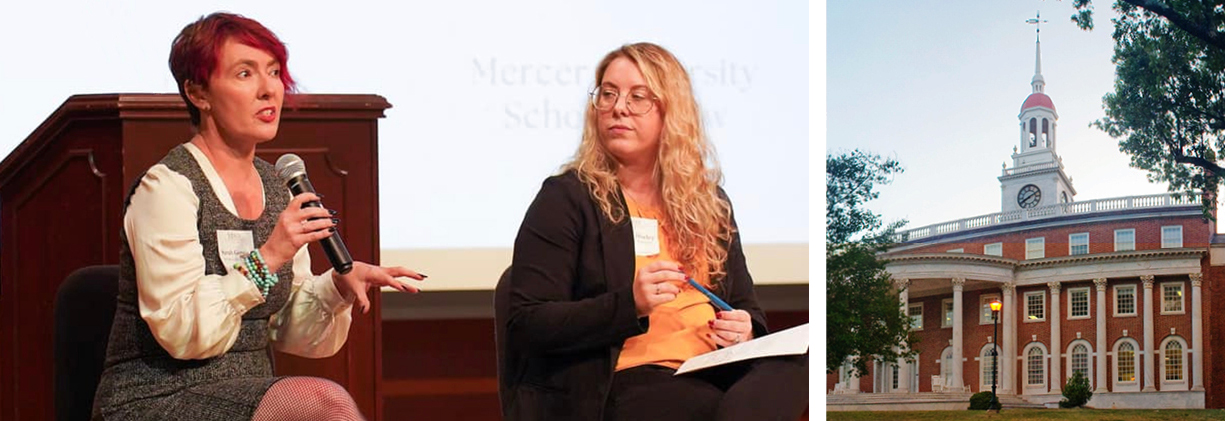
In 2006, newly minted assistant professor Sarah Gerwig established the Habeas Project at Mercer University School of Law, a post-conviction legal clinic providing pro bono representation for those whose constitutional rights have been violated and are unable to afford legal counsel. Since then, the nationally recognized program has had remarkable success in cases across Georgia.
Sarah has won many accolades and honors, among them the 2023 Judge Clyde Reese Award for Excellence in Teaching, for which she was nominated by the Mercer Law Class of 2018 in recognition of her lasting educational influence on students.
What change are you trying to make in the world?
Broadly speaking, I feel called to make the world more loving and just. At Mercer, I work to help students see gaps in the justice system and figure out where they can make a difference, while also ensuring that we’re still providing excellent and ethical representation.
How does your Candler experience tie into your work at the law school?
Candler shaped my teaching philosophy. It encouraged me to ask deeper questions about justice, and I bring that into my classrooms, challenging students to not just learn the “black letter law,” but also to think critically about legal precedents and justice gaps. Candler instilled a sense of boldness in my approach, which I now try to pass on to my students, encouraging them to challenge norms and seek justice in innovative ways.
What has been your biggest accomplishment?
Seeing the impact of my teachings reflected in the lives and actions of my students and my children. Watching them take the lessons they’ve learned and use them to pursue justice in the world, whether through law or other means, is deeply fulfilling.
What has been your greatest challenge?
Facing the enormity of the world’s grief and suffering. The scale of injustice is overwhelming. On top of that, chronic illness has limited my capacity, making me feel like I should be doing more. Despite these feelings, I try to remember that while we may not complete the work, our task is to continue it.
Tyler Sit
MDiv ’14
Church Planter/Pastor
New City Church, Minneapolis
Parish ministry, church planting, social justice
Tyler Sit is a self-described “lover of Minnesota, United Methodist pastor, and son of a Chinese immigrant.” He is also a visionary changemaker and the founding pastor of New City Church in south Minneapolis, a congregation mostly led by queer people of color and the first “built from scratch” UMC church plant in Minnesota to become financially self-sustaining in decades. With a deep commitment to social justice and environmental activism, Tyler has cultivated a spiritual community that embodies inclusivity and transformation.
Planted in 2017, New City Church takes its name from Revelation 21, which describes a heaven where God lives in a “new city” where all tribes are welcomed in, violence ceases, and the whole earth is renewed. New City takes this to heart, welcoming members from all racial, ethnic, and socioeconomic backgrounds, gender and sexual identities, physical and intellectual abilities, and religious beliefs as they join God’s work of transformation in their lives and communities. In addition to New City’s online community that spans the globe, the church launched a second physical branch in northeast Minneapolis in 2022, extending its mission of justice and renewal into a new context.
Eager to share his learning with others, Tyler wrote Staying Awake: The Gospel for Changemakers and co-founded Intersect, a church-planting network that centers marginalized voices and a postcolonial approach. He and others from Intersect co-wrote Where We Meet, exploring stories of Jesus and the early church along with their own stories to envision a future that better reflects the gospel. Together they delve into the vital need for innovation and contextualization in doing the work Jesus calls us to do.
Tyler’s work has been featured in prominent media outlets including the New York Times and The Atlantic, showcasing his dedication to creating a more just church and world where all are welcome.

Jonathan Trapp
DMin ’23
Associate Pastor, Lutheran Church of the Redeemer;
Special Advisor for Emergency Management, CDC
Parish ministry, public health
Meet Jonathan Trapp, a changemaker with a unique bivocational calling as an associate pastor for faith formation at Atlanta’s Lutheran Church of the Redeemer and a special advisor for emergency management at the Centers for Disease Control and Prevention (CDC). His story illustrates the profound impact of combining vocational callings and having the creativity and courage to lead change.
Throughout the COVID-19 pandemic, Jonathan’s dual expertise proved invaluable. In his public health role, he led efforts to ensure the safety and resilience of emergency response staff. As a pastor, he provided spiritual support to his congregation, navigating the complexities of ministry in a season of unprecedented crisis.
During this time, Jonathan’s work in Candler’s Doctor of Ministry program gave him the opportunity to combine theology and public service. His DMin project focused on implementing “Code Lavender,” a support intervention for caregivers experiencing acute stress, bridging his worlds of ministry and emergency management. Because of this, staff at the agency where Jonathan works were able to receive the care they desperately needed during an incredibly challenging time.
Through his research and real-life implementation, Trapp found a correlation between using Code Lavender to address acute stress and a decrease in reported stress among employees. “This suggests broadly that there is a role for spiritual and holistic health to play in supporting staff and addressing the stress they experience — particularly related to those involved in emergency response,” he notes.
With the pandemic over, Jonathan’s plan is to keep working with the agency to more fully integrate spiritual health into its internal work — with Code Lavender being a first step, not an end.
Alisha Gordon
MDiv '15
Founder, The Current Project
Author, Honestly, Alisha
Nonprofit leadership, writing, social advocacy, public theology
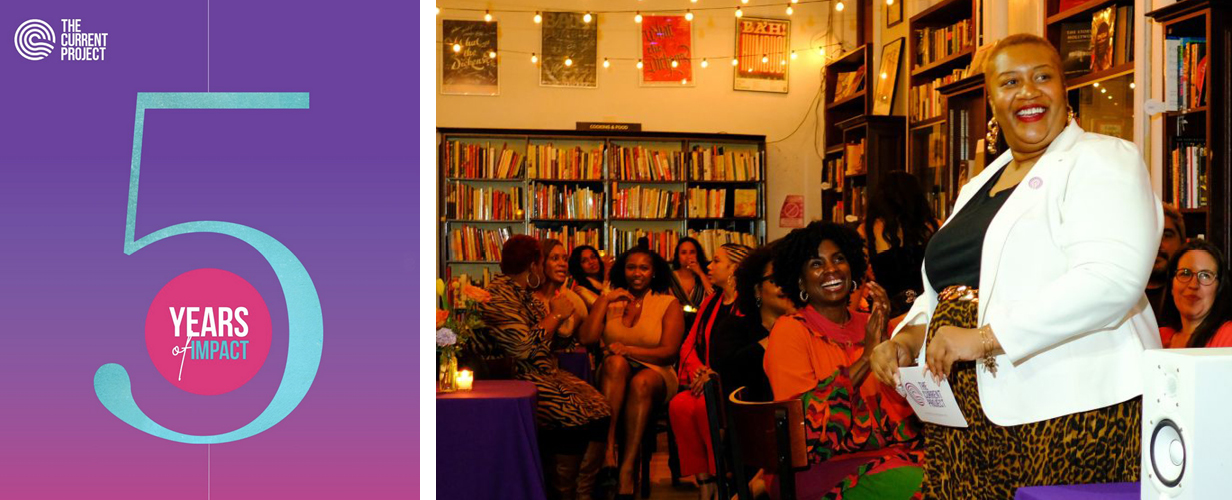
Alisha Gordon’s story is one of deep listening—to her own life, to the Spirit, and to the evolving shape of her call. When she entered Candler as a single mother making a bold vocational shift from teaching to ministry, she couldn’t have known just how intimately her personal narrative would shape the work she was called to do. That call was manifested through The Current Project, a nonprofit Alisha founded in 2019 to support the social, economic, and emotional well-being of Black single mothers.
Under her leadership, The Current Project launched a groundbreaking survey that amplified the voices of more than 500 middle-to-low-income Black single mothers and drew attention from The Wall Street Journal, Politico, and other major outlets. The organization raised nearly $1 million in support of mothers and their families, shifting public discourse from deficit to dignity, from stereotype to strength.
Alisha made the decision to sunset The Current Project in 2025, after five years of impactful work. Those years also saw the deaths of her mother, maternal grandmother, and brother over a six-month span. “Closing down a successful, awarded, and notable nonprofit, I’m sure, left some secretly scratching their heads,” she writes on her popular Substack newsletter Honestly, Alisha. “But I had become so bogged down with the doing I lost sight of the being.” Her new era focuses on that being, on her humanity as she processes grief, experiences joy, and takes action in ways that make her feel most alive, like writing, her “first love.”
“I’m in this place of a contentment that’s not fueled by what’s next: not the next thing to solve, or the next thing to fix, but the contentment that’s fueled by a grounded, quiet state of being that is satisfied with the work I’ve done,” she says.
The chapters of Alisha’s story show how God is constantly doing a new thing—around us, in us, through us—and that change can be a gift.
“For the first time in my adult life, I don‘t know what’s next, and I love that for me.”

Amina McIntyre
MTS '16
Playwright and Scholar
Public theology, arts, social justice
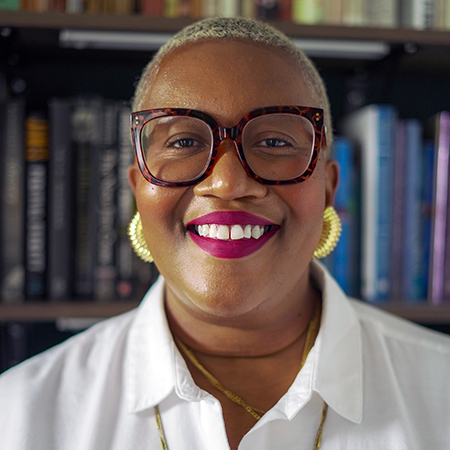
For Amina McIntyre, the stage is sacred ground. As an award-winning playwright, scholar, and elder in the Christian Methodist Episcopal Church, she explores the intersection of theology, social justice, and the arts, asking how creativity can be not just expressive, but transformative—especially for communities carrying generational wounds. Through her unique lens, she invites audiences into spaces of collective healing, using ritual and story as tools for restoration.
Amina’s plays have been featured at Atlanta’s 7 Stages Theatre, Actor’s Express, and the Vanguard Repertory Theatre, to name a few. But her work lives outside theaters, too: in sanctuaries, classrooms, and public spaces like the Atlanta History Center and Oakland Cemetery. Through Amina’s artistry, a 3-minute modern interpretation of Paul and Silas in jail doubles as a Scripture lesson; a 5-minute scene with Jacob, Rachel, and Leah working out their issues late in life kicks off a Christian education discussion; and a one-act play interrogates social issues that tear at our humanity.
Amina’s blend of live theater and social justice advocacy has entered even into the most interior of spaces—living rooms across metro Atlanta. Her latest play, How to Make a Home, was performed in a number of private homes as part of Out of Hand Theater’s “Shows in Homes” series. The intimate, cozy spaces were perfect settings for How to Make a Home, bringing its core issue of homelessness into stark relief. The play follows a single father as he loses his home and moves through the complex landscape of Atlanta’s housing support systems while raising his young daughter. With emotional honesty and clarity, the work reveals the cost of homelessness in human terms without losing sight of the hope that flickers through the cracks of systems and circumstances. The play was nominated for four Suzi Bass Awards from the Atlanta theater community and won top prize in the playwrighting category.
Whether in theaters, churches, or living rooms, Amina uses her creative talents and prophetic voice to tell stories that matter. Stories that hold grief and grace in the same breath. Stories that remind us that art isn’t separate from life or faith—it is both in action.
 Photos: Noah Washington; Thomas Morse
Anna Swygert
MDiv '20
Assistant Director, Streetlight, University of Florida Health
Adolescent palliative care
What change are you trying to make in the world?
I am trying to expand our understanding of health to include more than just physical health. The psychological, emotional, social, and spiritual dimensions of health are vital to our experience of wellness and quality of life. My patients remind me that obstacles to holistic health are often rooted in inequity, poverty, and injustice.
Tell us about your work/ministry context.
Streetlight is an adolescent palliative care program unique to UF Health. It provides peer support to teenagers and young adults with chronic and life-limiting illnesses, including cancer, cystic fibrosis, sickle cell disease, and others. As the assistant director, I organize the psychosocial care of these patients, cultivating meaningful relationships to buffer the effects of medical stress, prevent poor mental health outcomes, and improve health-related quality of life. I manage a team of 60 undergraduate volunteers, educating and empowering them to create supportive relationships with these vulnerable and hard-to-reach young people as they navigate their medical journey through cure and survivorship or end-of-life and death. 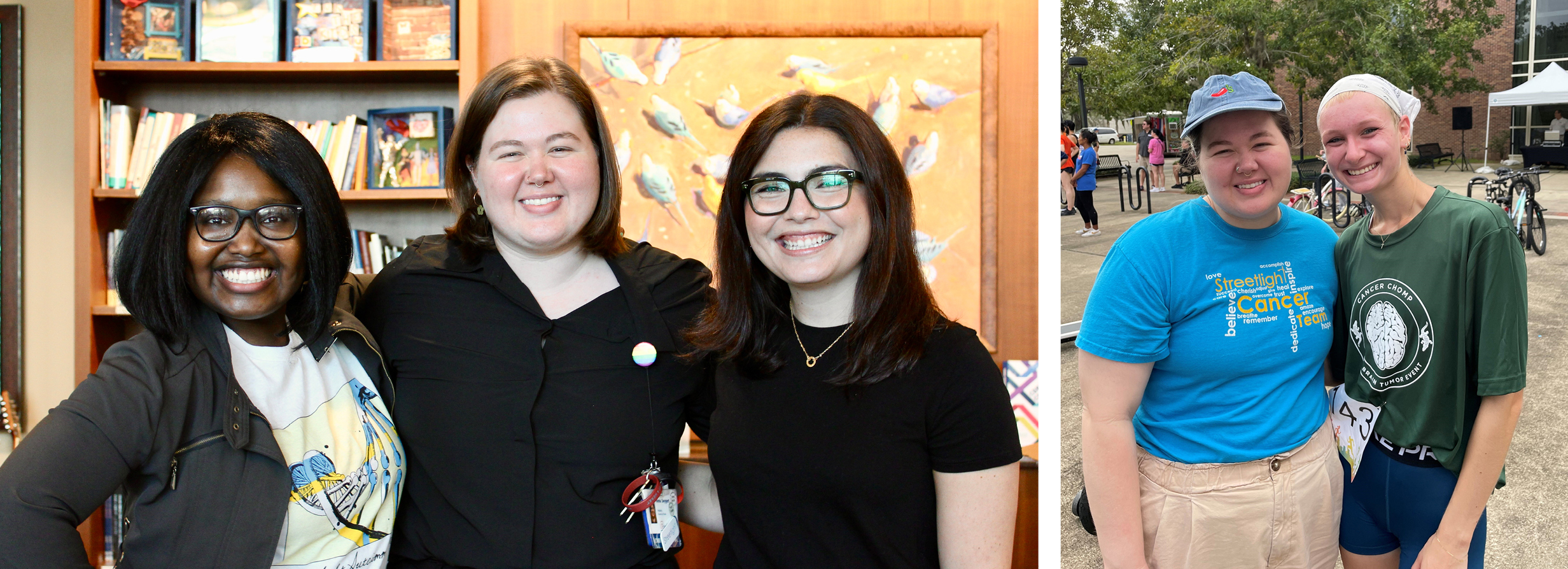
What do you love about your vocation?
I love getting to know these resilient teenagers and young adults and creating memories with them. It’s a great privilege to hang out with my patients, laugh and be silly with them, and build lasting relationships full of both joyous and sad moments. I have the additional privilege of empowering college students in their ability to care for these patients, and I love getting to know my volunteers and helping them imagine creative ways to support our patients, whether it’s a Fortnite-themed end of treatment party or a murder mystery night in our teen-only lounge. It is powerful to see these young adult volunteers initiate and maintain relationships with these patients who often cannot imagine making a friend in the hospital.
What do you consider to be your greatest life accomplishment (so far!)?
My greatest life accomplishment has been finding meaningful work that honors my gifts and passions. I spent years fearing I would need to sacrifice parts of myself to fit within a specific occupation, but I have found opportunities for creative ministry that honors my multitudes.
What has been your greatest challenge?
In 2022, my ordination was protested due to openly queer candidates in my commissioning class. In 2023, I was among the first openly queer candidates to be commissioned in the Southeastern Jurisdiction of The United Methodist Church. And in 2025, I was ordained a deacon in the Florida Annual Conference of the UMC. 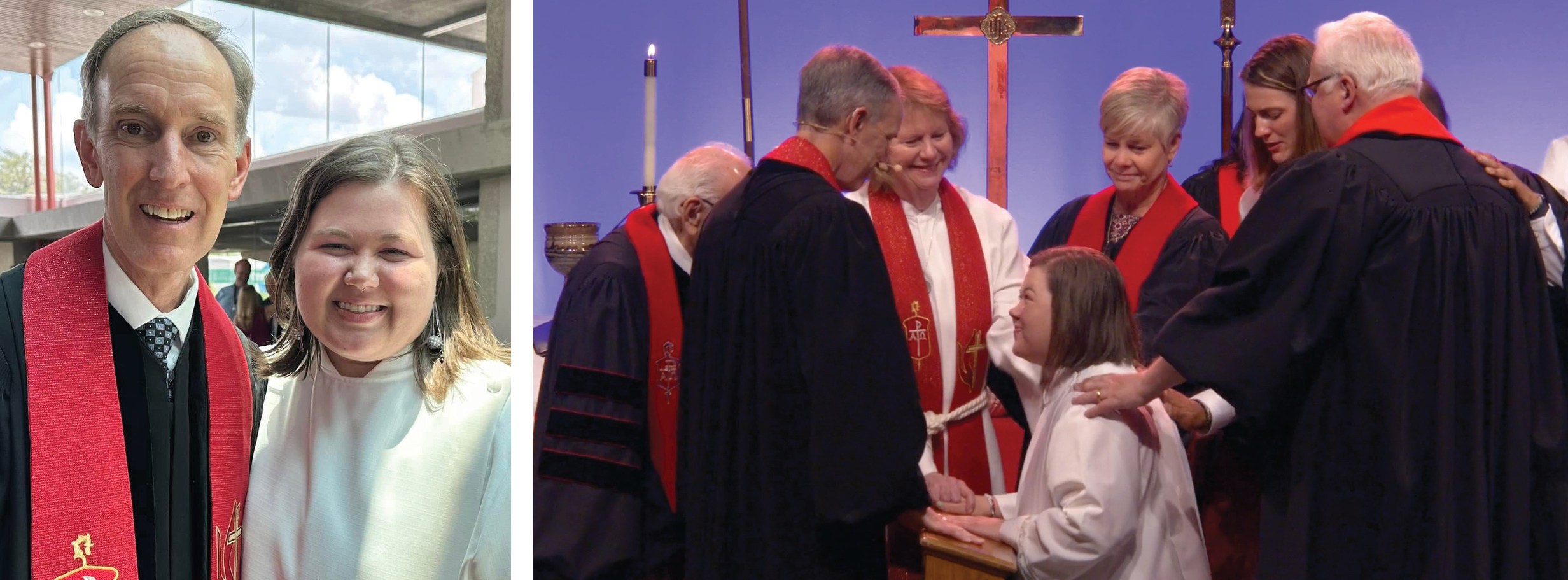
Timothy Peoples
DMin '23
Senior Pastor, Wilshire Baptist Church, Dallas, Texas
Parish ministry, racial reconciliation
Timothy’s story is coming soon…