Contextual Education I
Practical, hands-on ministry experience to help you sharpen your skills and better understand your call
The Contextual Education I program gives MDiv students an opportunity to explore a wide range of ministries, contexts, social issues, and pastoral relationships beyond congregational settings.
In this first year of Con Ed, you’ll serve in a social service or clinical setting, where you’ll be introduced to frontline ministry in various forms, like working with low-income families to meet their housing and food needs, building relationships with newly arrived refugees, or serving as a chaplain in a prison, medical center, or with the elder population.
At the end of your first year of Con Ed, you will have gained:
- The ability to integrate theological concepts with ministry practice
- Broadened ideas of vocational identity and calling
- An expanded notion of church and of ministry
- Skills for leadership in ministries of justice and reconciliation
If you are in the Teaching Parish Program, your Con Ed placement may be different from what’s described here. Please see the page on Teaching Parish for a description of this equally rich Contextual Education program.
Connect. Reflect. Integrate.
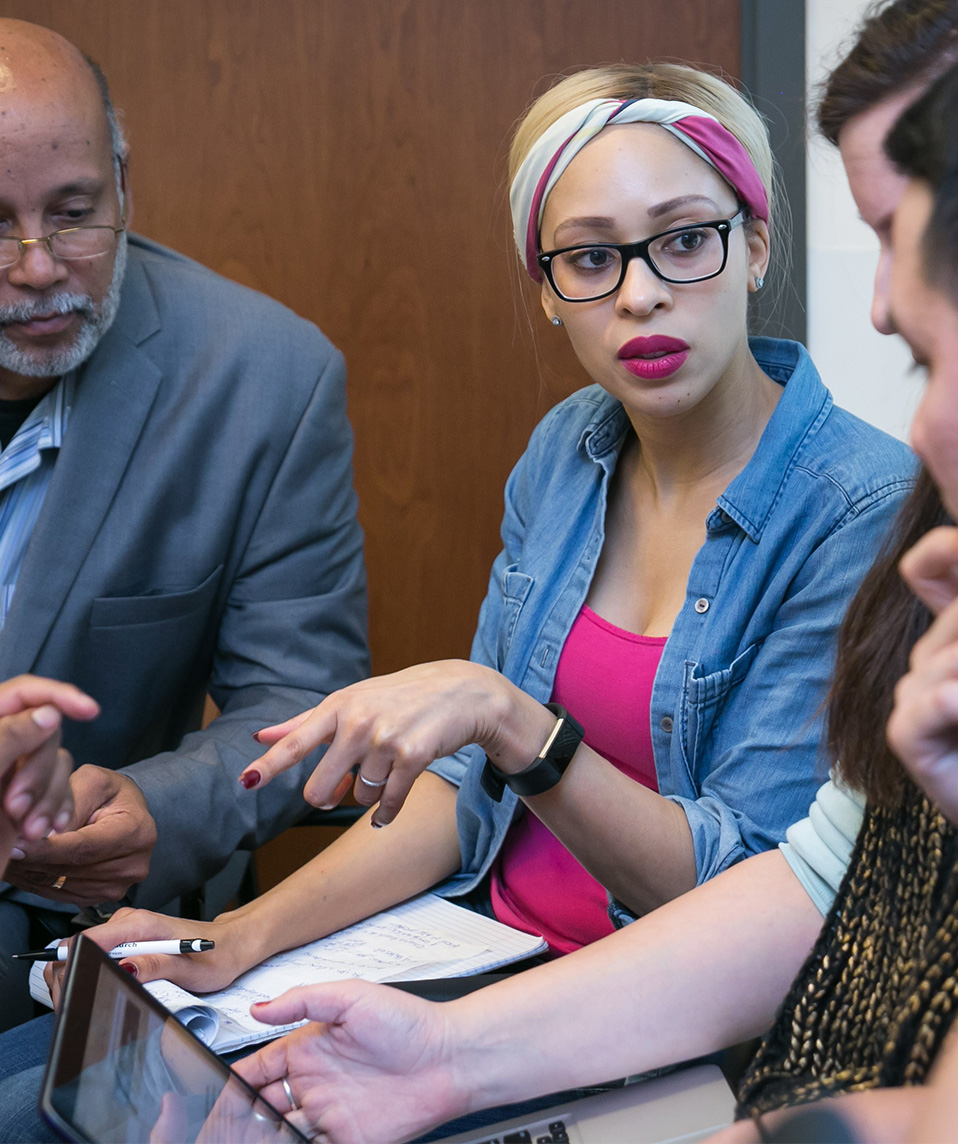
Contextual Education is deep learning that emerges from experience, reflection, and community. In addition to hands-on ministry and leadership experience, you’ll get a chance to reflect on that experience with peers, plus the guidance of a seasoned supervisor and faculty member. Each week, you’ll spend four hours working at your site and 90 minutes in a reflection group in the fall or 2 hours in an integrative seminar in the spring.
Choosing a Con Ed I Site
There are several factors to consider when choosing your site for Con Ed I.
First, if you’re a residential student, you’ll choose from Candler’s partner sites in the metro Atlanta area. If you’re a hybrid student, you’ll identify a clinical or social ministry setting in your own geographical area in conversation with the Office of Contextual Education. Hybrid students will be grouped into themed cohorts for their reflection groups and integrative seminars. Your site placement stays the same for the academic year.
As you consider which site would work best for you, think about which contexts and experiences will allow you to explore your vocational aims and develop skills for ministry. This won’t be your only opportunity to gain practical ministry experience while at Candler, but it’s a great opportunity to dive in and try something new. And don’t forget to factor in the logistics of getting to and from the site as well as the time the reflection group or integrative seminar meets.
Con Ed I Sites for Residential Students
Campbell-Stone Apartments provides affordable housing for older adults, with a location in Buckhead (just north of Midtown Atlanta) and another in Sandy Springs (20 miles north of Emory). Students work to develop spiritual care and community programming for residents, including pastoral care, worship opportunities, and group activities.
Regional Youth Detention Centers (RYDCs) are secure short-term centers operated by the Georgia Department of Juvenile Justice (DJJ). RYDCs are for youths awaiting trial in Juvenile or Superior Court, or awaiting a community placement more suitable for their needs. As chaplain interns, students assist in establishing hope, a commitment to community, and the duty to care by supporting positive change through youth accountability and responsible youth leadership and service.
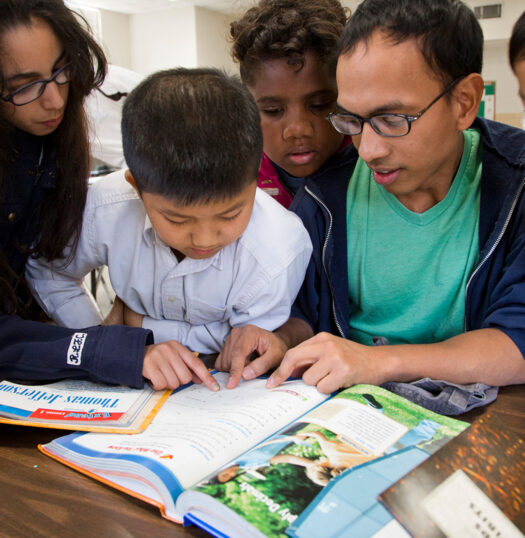
New American Pathways is an Atlanta-based nonprofit with the mission of helping refugees and Georgia thrive. Students can choose between two programs: The Bright Futures After School Program, serving elementary school children, and The English at Home program, offering English as a Second Language (ESL) tutoring support to refugees.
Toco Hills Community Alliance is a group of faith communities and others working together to help those in need in DeKalb and northeast Atlanta. Con Ed I interns function in a variety of roles, including assisting with packing and distributing groceries, greeting and intake for those receiving services, working directly with volunteers, as well as assisting in locating or developing additional resources.
Con Ed I Cohorts for Hybrid Students
Students in the Justice, Advocacy, and Movement Building Cohort will work four hours each week with organizations and ministries in their local communities that support social and economic development, social justice, and community flourishing through organizing and advocacy initiatives. This work may focus on any of a wide range of social justice issues, including economic justice and labor issues, racial justice concerns, health access, educational equity, environmental and climate justice, or other issues of significance to local or regional well-being.
Students in the Immigrant and Refugee Accompaniment Cohort will work with organizations and ministries in their local communities that provide support for and stand in solidarity with migrants. This work may take a variety of forms, including initiatives that address the immediate material needs of refugee and immigrant communities; support communities through programs or events (such as after-school programs); or affirm immigrants and refugees in exercising their rights through political or social advocacy.
Students in the Food Justice and Sustainability Cohort will work with organizations and ministries in their local communities that address hunger, expand access to nutritious food, build just and sustainable food systems, and care for creation.
Students in the Care in Community Cohort will work four hours each week with organizations and ministries in their local settings that provide care to individuals and groups and cultivate or support wider networks of care, with particular attention to individuals and populations who are vulnerable or in crisis.
Students in the Health, Wellness, and Spiritual Care Cohort will work four hours each week with organizations and ministries in their local settings that provide care to individuals and groups and cultivate or support wider networks of care, with particular attention to individuals and populations who are vulnerable or in crisis. This work may take a variety of forms, including initiatives that provide spiritual or pastoral care, address immediate material needs, or support individuals and communities through structural and programmatic responses to need.
Con Ed I Overview
- Stewards of Children Training
- CE551a or CE551HYBa. Contextual Education I Site Reflection (first semester only; 3 hours)
- CE551b or CE551HYBb. Contextual Education I Integrative Seminar (second semester only; 3 hours)
Reflection Group and Integrative Seminar
In the first semester, students meet weekly for a 90-minute Reflection Group led by an experience site or cohort supervisor (CE551A or CE551HYBA, 3 hours). In the spring semester, students meet weekly with a faculty member and the site or cohort supervisor for an Integrative Seminar that brings the experiential learning of the site into conversation with the wider seminary curriculum (CE551551b or CE551HYBb, 3 hours). As part of this coursework, Con Ed I students meet for monthly plenary sessions focused on core skills for ministry.
Students will work four hours per week at the same Contextual Education I site throughout both semesters.
Completion Requirements
Upon successful completion of the site work, the reflection group, the integrative seminar, and Con Ed Plenary workshops, a student receives the six (6) hours credit for Contextual Education I. Note: Students receive an “In Progress” (IP) grade for the fall semester. Only when both semesters have been satisfactorily completed will a satisfactory (S) grade be awarded for each semester.
For students who entered prior to Fall 2023
In addition to the requirements described above, students are required to complete a Contextualized Introduction to Pastoral Care (PC501CE) concurrently with their enrollment in Con Ed I.
Incoming Residential M.Div. students will choose a site for their Contextual Education I placement from the following list. Students work in these sites four hours per week throughout the academic year. The webpage for each individual Con Ed I site includes information about the type of work students are engaged in, the days and times that work takes place, and any additional site requirements.
Instructions on how to enroll will be sent to all incoming students in the summer before their first semester. Each site hosts a limited number of Candler students, and enrollment for sites and corresponding reflection groups (held in the fall) will close once they reach capacity.
| Site | Site Work Hours | Reflection Group (Fall '25) |
|---|---|---|
| Campbell-Stone Apartments | Monday–Friday 9:00am – 7:00pm and some weekend services; Weekend hours may expand as the year progresses. (In-person) PC501 strongly recommended COVID & Flu Vaccines strongly recommended | Tuesday, 2:30 - 4:00pm |
| Metro Regional Youth Detention Center | Tuesday 3:30pm–7:30pm (In-person) PC501 strongly recommended | Thursday, 3:00 - 4:30pm |
| New American Pathways | After-school program: Monday–Friday 3:45pm–6:30pm; Student mentoring: 2-3 hours/week based on mutual availability. (In-person) | Friday, 10:00–11:30am |
| Toco Hills Community Alliance | Tuesday, Wednesday, Thursday, 9:00am–4:00pm (In-person) | Monday, 3:00pm–4:30pm |
Contextual Education I students in the Hybrid MDiv program will identify a clinical or social ministry setting within their own geographical region in conversation with the Office of Contextual Education. Instructions on how to enroll will be sent to all incoming students in the summer before their first semester.
Over the course of the year, students will:
- serve four hours each week at these sites throughout the academic year,
- meet regularly with a site mentor to reflect on their site work, and
- meet weekly for theological reflection on their contexts with a cohort of students serving in similar settings, alongside cohort supervisors and faculty.
In the fall semester, students meet weekly with their 90-minute Contextual Education I Cohort, led by an experienced cohort supervisor. In the spring semester, students meet weekly with a faculty member and the cohort supervisor for a two-hour Integrative Seminar that brings the experiential learning of the site into conversation with the wider seminary curriculum. Students will work four hours per week at the same Contextual Education I site throughout both semesters and will meet regularly with local site mentors who help to guide their work.
| Hybrid Contextual Education I Cohorts | Site Work Hours | Online Reflection Group (Fall) |
|---|---|---|
| Justice, Advocacy, and Movement Building Cohort | 4 hours/week | Tuesday, 2:30-4:00 pm |
| Immigrant and Refugee Accompaniment Cohort | 4 hours/week | Monday, 6:00–7:30pm |
| Food Justice & Sustainability Cohort | 4 hours/week | Tuesday, 4:00-5:30pm |
| Care in Community Cohort | 4 hours/week | Monday, 6:00-7:30pm |
Interested in becoming a site mentor? Review expectations and requirements for Candler Hybrid Contextual Education I Sites and Site Mentors.
International students who qualify for Curricular Practical Training (CPT) may enroll in Contextual Education I in their first year of the MDiv program. International students must work with the Office of Contextual Education to receive authorization prior to their first visit to the Contextual Education I site. International students should contact the Office of Contextual Education at candlerconed@emory.edu or 404-727-4178.
For more information, please review the Contextual Education Handbook and visit the Office of International Student and Scholar Services (ISSS).
Scenes from Con Ed I

Campbell-Stone Apartments
As chaplain interns, Con Ed I students visit with residents of this in-town retirement community.

New American Pathways
Students serve in ministries with refugees and immigrants, either working with elementary school children in an after-school program or working as ESL tutors with older children and adults.
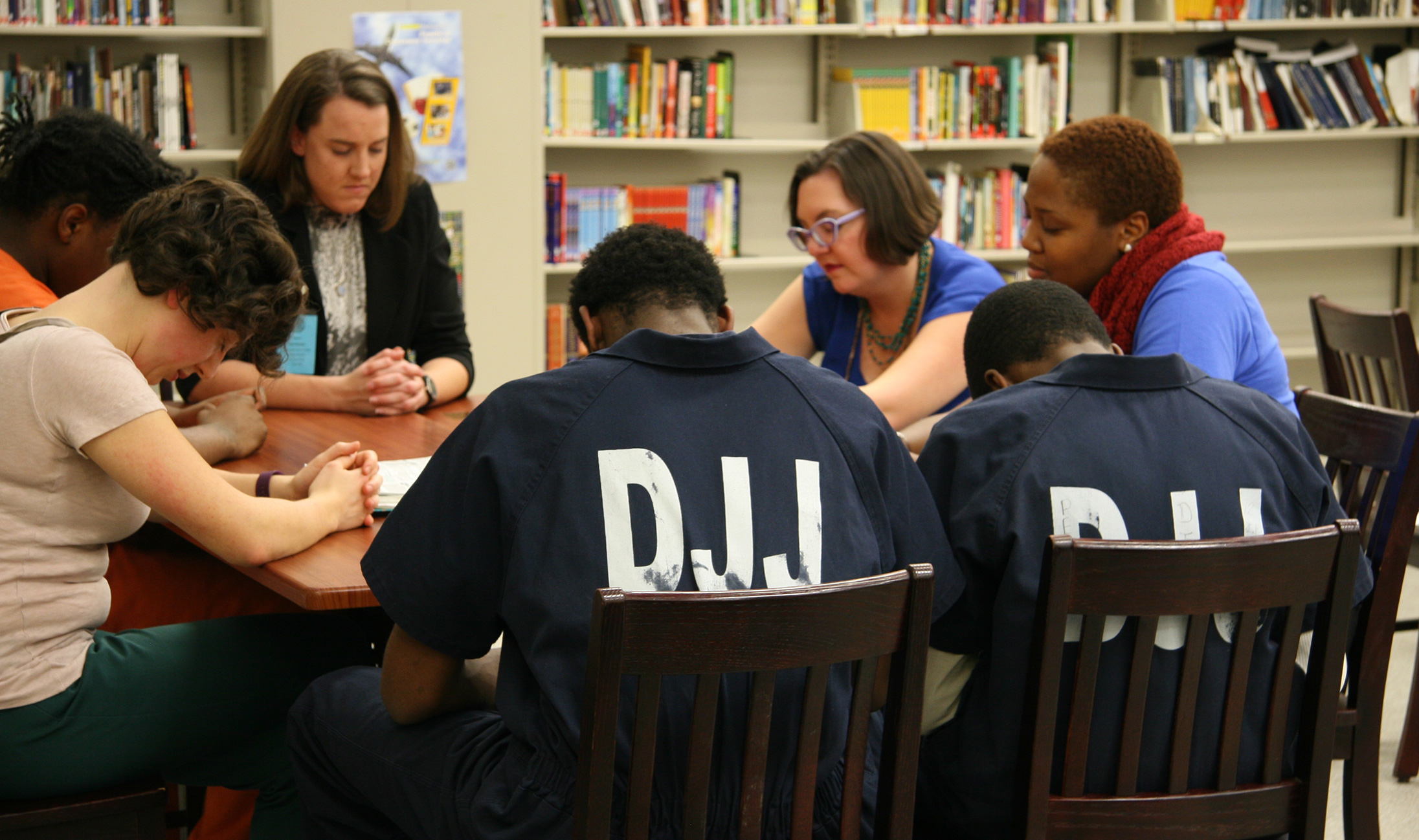
Metro Regional Youth Detention Center
Students are chaplain interns at this center run by the Department of Juvenile Justice, focusing on establishing hope and a commitment to community.
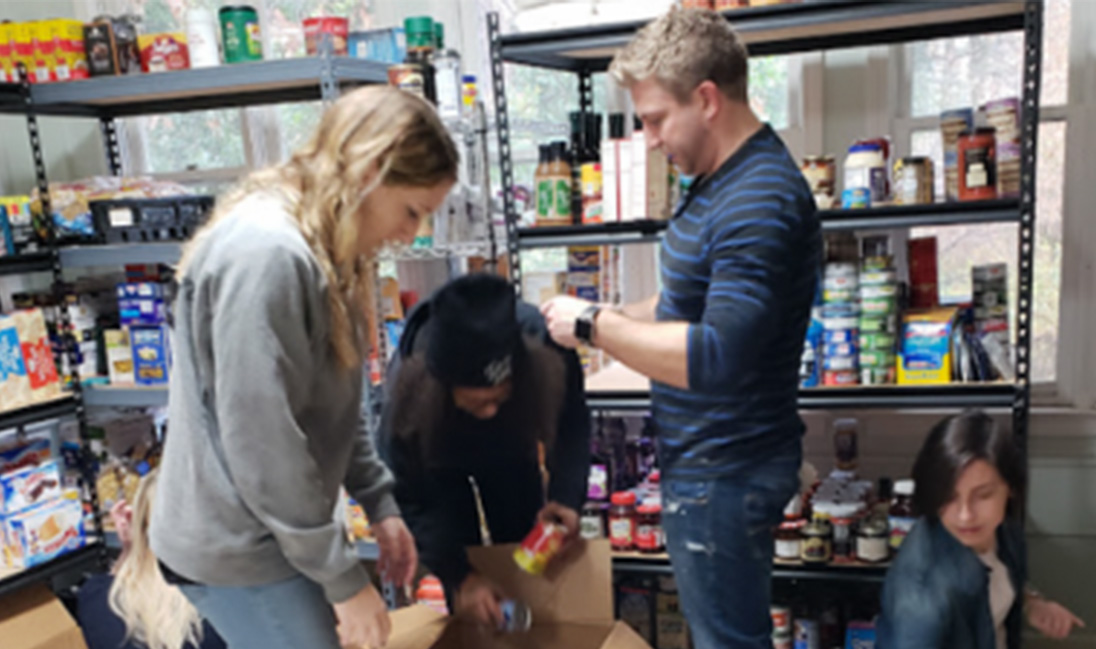
Toco Hills Community Alliance
THCA provides free groceries to the food-insecure. Students are involved in a variety of tasks, including packing and distributing groceries to clients.
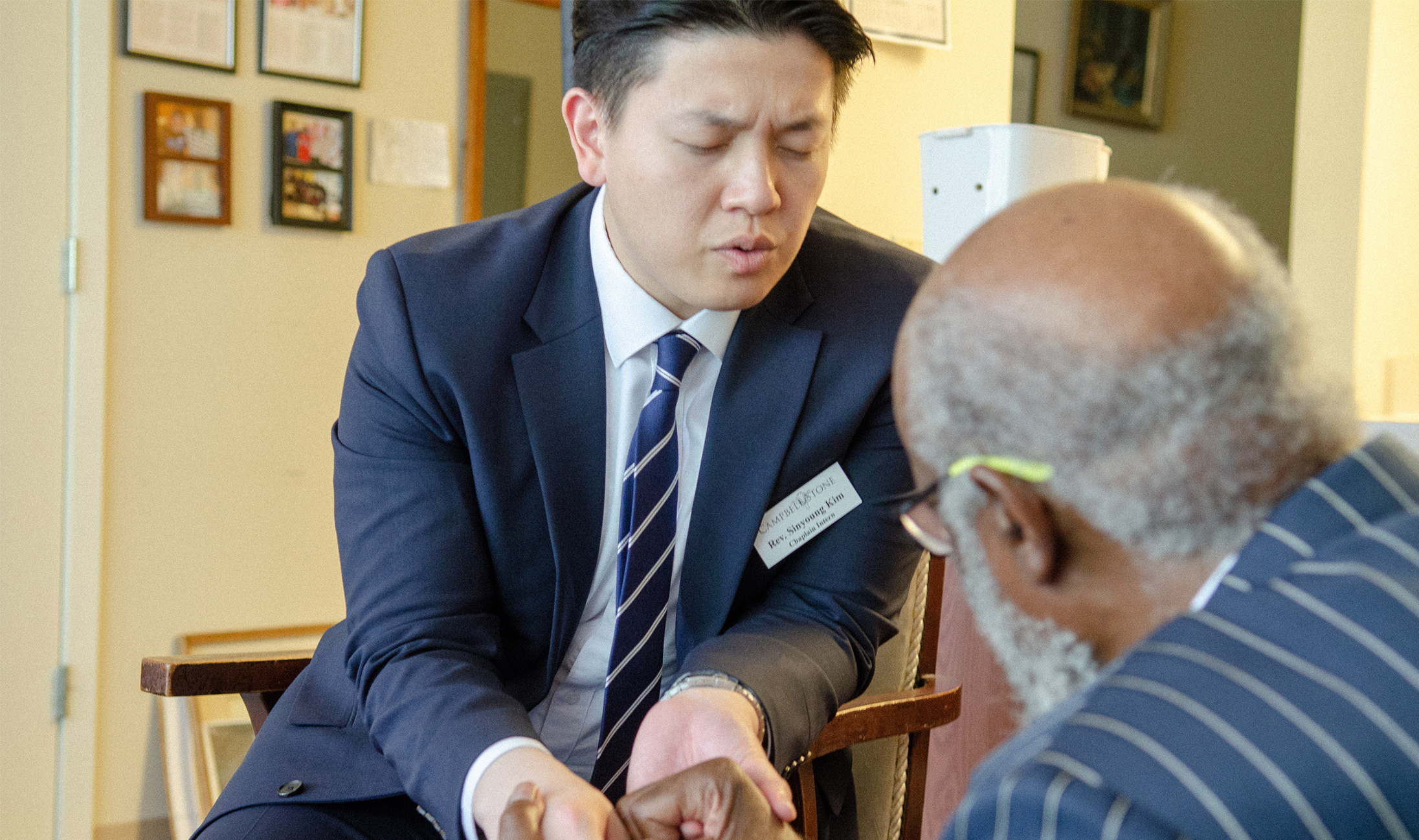
Campbell-Stone Apartments
Cross-cultural and intergenerational encounters broaden the horizons of students serving at Campbell-Stone.
Candler Firsthand
Hear what Con Ed has meant to these students and recent alumni.


“Candler’s ConEd program is both spiritually nourishing and deeply rewarding...It’s a carefully crafted way to not just imagine yourself in various ministry contexts, but to actually inhabit those spaces and learn what it is truly like...Con Ed is like the perfect dressing room in a clothing store: You get to try on your favorite outfit to make sure it’s the right fit before you walk out the door.”
Co’Relous Bryant
MDiv '22
“Candler’s ConEd program is both spiritually nourishing and deeply rewarding...It’s a carefully crafted way to not just imagine yourself in various ministry contexts, but to actually inhabit those spaces and learn what it is truly like...Con Ed is like the perfect dressing room in a clothing store: You get to try on your favorite outfit to make sure it’s the right fit before you walk out the door.”
Co’Relous Bryant
MDiv '22

“I wanted a program that was not fully residential, but had the benefits of an in-person education and formation. My favorite parts were an informal gathering after our Wednesday Con Ed class and worship. We would get dinner at a local restaurant and just process our time together. We’ve made so many good memories and theological debate over falafel.”
Emily Badgett
MDiv '24
“An experience that will stick with me forever happened during Con Ed I, when I was able to go amongst the homeless community of Atlanta. During this time I was prayed over and imparted with a ‘sown seed’ for my life. This moment established in me the many ways God can work.”
David Fitzer
MDiv '23